


| Product | Price | ||||
|---|---|---|---|---|---|
|
Steel Billet 150×150 mm
Update:
Thursday, 14 May 2026
|
150*150 |
12‑meter bar, 6‑meter bar |
Factory |
MT |
JText::_('PLG_HIKASHOP_RPPPRICEHISTORY_PRICE_CHANGE')
10
▼
$380.00000 ($380.00000 excl VAT) each
|
|
Steel Billet 130×130 mm
Update:
Thursday, 14 May 2026
|
130*130 |
12‑meter bar, 6‑meter bar |
Factory |
MT |
JText::_('PLG_HIKASHOP_RPPPRICEHISTORY_PRICE_CHANGE')
20
▼
$380.00000 ($380.00000 excl VAT) each
|
|
Steel Billet 125×125 mm
Update:
Thursday, 14 May 2026
|
125*125 |
12‑meter bar, 6‑meter bar |
Factory |
MT |
JText::_('PLG_HIKASHOP_RPPPRICEHISTORY_PRICE_CHANGE')
20
▼
$380.00000 ($380.00000 excl VAT) each
|
|
Steel Billet 100x100 mm
Update:
Wednesday, 29 April 2026
|
100x100 |
12‑meter bar, 6‑meter bar |
Factory |
MT |
Free |
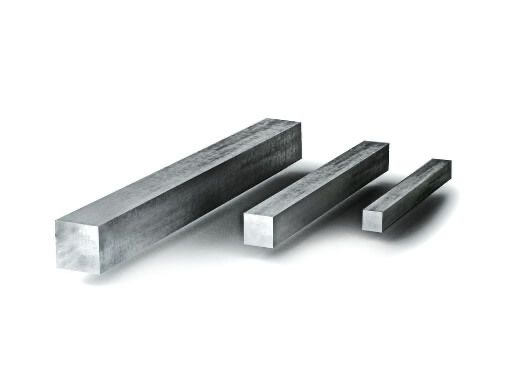
Export Steel Billet Prices: Analysis & Market Review
Introduction
Export steel billets are one of the most important raw materials in the steel industry. Due to their high quality, structural strength, and wide industrial applications, they are in strong demand in global markets.
In this article, we examine all key factors influencing export steel billet prices, along with technical details, market insights, and purchasing guidelines for international buyers.
For daily price updates, visit the article on the impact of global steel prices on the export rebar market.
Key Factors Influencing Export Steel Billet Prices
1. Global Iron and Steel Prices
The most influential factor in billet export pricing is the global steel and iron market trend.
2. Market Demand
Strong demand from steel mills and manufacturing industries drives billet prices upward.
3. Billet Quality
Higher purity, higher Fe content, lower impurities, and controlled chemical composition result in increased pricing.
4. Production Costs
Melting, casting, energy, labor, and processing costs directly influence final export prices.
5. International Shipping Costs
Freight rates, insurance, loading fees, and transportation type (bulk / container / break‑bulk) impact the final CIF/FOB price.
6. Trade Relations & Economic Conditions
Trade agreements, customs policies, and diplomatic relations between countries affect export markets.
7. Global Economic Indicators & Exchange Rates
Currency fluctuations, inflation, and global economic shifts influence billet export prices worldwide.
Types of Steel Billets
1. 3SP Billet
Characteristics:
– Lower tensile strength than 4SP and 5SP
– Suitable for general construction
Applications:
– Rebar manufacturing
– Light steel sections
– Construction steel products
2. 4SP Billet
Characteristics:
– Medium tensile strength
– Good combination of strength and flexibility
Applications:
– Semi‑industrial components
– Medium‑duty steel products
3. 5SP Billet
Characteristics:
– Higher tensile strength
– Strong resistance required for industrial applications
Applications:
– Industrial components
– Heavy machinery parts
– Special steel structures
Billet Production Methods
1. Induction Furnace Production
Process:
Steel scrap or DRI is melted in induction furnaces and cast into billets.
Advantages:
– High purity
– Suitable for premium-grade billets
2. Electric Arc Furnace (EAF) Production
Process:
Iron and scrap are melted in EAFs and cast into high-volume billets.
Advantages:
– Higher production capacity
– More efficient for mass production
For more information, refer to Raw Materials Used for Billet Production.
Chemical Composition Table
| Billet Type | Carbon © | Silicon (Si) | Manganese (Mn) | Phosphorus (P) | Sulfur (S) |
|---|---|---|---|---|---|
| 3SP | 0.17–0.24% | 0.15–0.35% | 0.40–0.70% | <0.045% | <0.045% |
| 4SP | 0.25–0.32% | 0.20–0.40% | 0.45–0.75% | <0.040% | <0.040% |
| 5SP | 0.28–0.37% | 0.15–0.35% | 0.50–0.80% | <0.040% | <0.040% |
Common Steel Billet Sizes
Typical dimensions include:
- 100 × 100 mm
- 120 × 120 mm
125 × 125 mm - 130 × 130 mm
- 150 × 150 mm
- 200 × 200 mm
These sizes ensure compatibility with rolling mills and downstream steel production.
Storage & Transportation Guidelines
Storage
– Store in dry, ventilated warehouses
– Protect from moisture to prevent rust formation
Packaging
– Moisture‑resistant covers
– Secure bundling for long-distance shipment
Transportation
– Use weather-resistant bulk containers
– Prevent shifting during sea transport
International Billet Standards
Common standards for export:
- ISO 9001 – Quality management
- ISO 14001 – Environmental management
- ISO 45001 – Occupational health & safety
Major Importers of Iranian Steel Billets
Iranian billets are widely exported due to competitive prices and good chemical consistency.
Main importing countries include:
- China
- India
- Turkey
- Iraq
- UAE
- Pakistan
- South Korea
How to Place an Export Billet Order
- Select the product – Choose billet type (3SP/4SP/5SP) and quantity
- Contact the supplier – Submit your request to the exporter or mill
- Review prices – Based on international steel trends and shipping conditions
- Finalize the order – Confirm terms, specifications, and delivery
Conclusion
Export steel billet prices depend on global markets, product quality, raw material costs, and international shipping conditions. By understanding billet types, chemical specifications, and production methods, suppliers and buyers can make informed decisions.
With proper storage, packaging, and adherence to international standards, producers can maintain high product quality and strengthen their global presence.
FAQ
How is the export price of billets calculated?
Based on global steel prices, production costs, and international freight rates.
Where are steel billets used?
Rebar, steel sections, flat products, and various industrial components.
What factors influence billet quality?
Purity of raw materials, melting method, and precision in chemical composition.
For bulk supply, competitive export pricing, and reliable shipment of 3SP, 4SP, and 5SP steel billets, contact Ahanist Trading Group to request updated prices and receive a tailored quotation based on international market trends.
+989122651909