
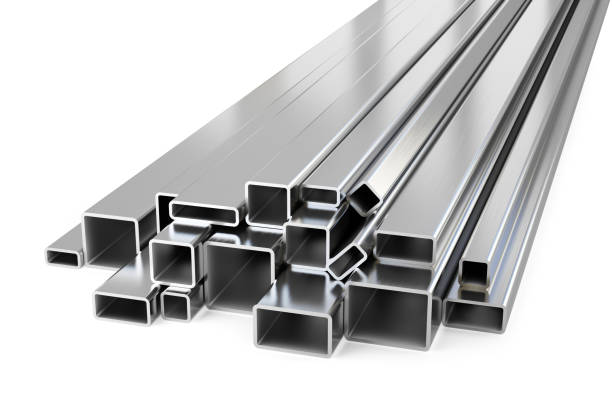
Export Steel Profiles: Price Overview and Market Analysis
Steel profiles are among the most widely used steel products across various industries, including construction, automotive manufacturing, furniture production, and many other industrial sectors. Due to their structural strength and versatility, steel profiles play a key role in modern infrastructure and manufacturing projects.
Iranian export steel profiles have gained increasing attention in international markets thanks to their competitive pricing, reliable quality, and diverse size availability. These products are widely supplied to regional and global markets for both structural and industrial applications.
Why Choose Iranian Export Steel Profiles?
Iran is one of the significant producers of steel profiles in the region. Export profiles manufactured in Iran are known for their good mechanical properties, durability, and cost efficiency, making them attractive to international buyers.
Key advantages include:
- Competitive production costs compared to many global suppliers
- Reliable manufacturing quality from modern steel mills
- Availability of a wide range of sizes and thicknesses
- Efficient logistics access to regional and international markets
These advantages make Iranian steel profiles suitable for large construction projects and industrial applications.
Types of Export Steel Profiles
Export steel profiles are generally categorized into two main groups based on their shape:
Rectangular Steel Hollow Sections (RHS)
Rectangular hollow sections are widely used in construction frameworks, machinery structures, and industrial equipment due to their excellent load-bearing capability and structural stability.
Common sizes include:
- 10 × 20 mm
- 20 × 40 mm
- 30 × 60 mm
- 40 × 80 mm
- 50 × 100 mm
- 60 × 120 mm
- 80 × 160 mm
- 100 × 200 mm
These sections are typically used in structural and industrial projects where rectangular geometry offers better strength distribution.
Square Steel Hollow Sections (SHS)
Square hollow sections are commonly used in structural frames, metal fabrication, and architectural applications due to their balanced strength and uniform shape.
Typical sizes include:
- 10 × 10 mm
- 20 × 20 mm
- 30 × 30 mm
- 40 × 40 mm
- 50 × 50 mm
- 60 × 60 mm
- 80 × 80 mm
- 100 × 100 mm
- 120 × 120 mm
- 140 × 140 mm
- 200 × 200 mm
Square profiles are particularly suitable for construction structures, frames, supports, and industrial fabrication.
Thickness Range
Steel profiles produced in Iran are available in a wide range of thicknesses depending on the intended application.
Typical production thickness ranges from 1 mm to 12 mm, allowing buyers to select the appropriate profile strength and weight for their projects.
For export orders, buyers usually specify dimensions, thickness, and required quantity to ensure the product meets their technical requirements.
Advantages of Using Steel Profiles
Steel profiles offer several benefits that make them essential in modern construction and manufacturing:
- High structural strength and resistance to tensile and compressive forces
- Wide range of sizes and thicknesses for different applications
- Excellent weldability for strong and reliable connections
- Long service life with good durability
- Recyclable material suitable for sustainable construction
Industrial Applications of Steel Profiles
Steel profiles are used in many industries and infrastructure projects worldwide, including:
- Construction industry: structural frames, building supports, doors and windows
- Automotive industry: chassis components and structural parts
- Furniture manufacturing: metal frames for furniture and equipment
- Agricultural industry: greenhouse structures and farming equipment
- Marine industry: docks, piers, and marine infrastructure
Thanks to their strength, versatility, and availability in multiple dimensions, steel profiles remain a fundamental component in both industrial manufacturing and structural engineering projects.